

Metal filtration media selected for chemistry, temperature and pressure
Chemical and hydrocarbon services require more than corrosion-resistant material. Retention, flow, pressure cycling, cleaning chemistry, static risk, seal design and traceability all influence safe, stable operation. We supply woven filter mesh, perforated supports, filter tubes, discs, baskets and custom fabricated parts in stainless-steel grades selected against the actual service environment.
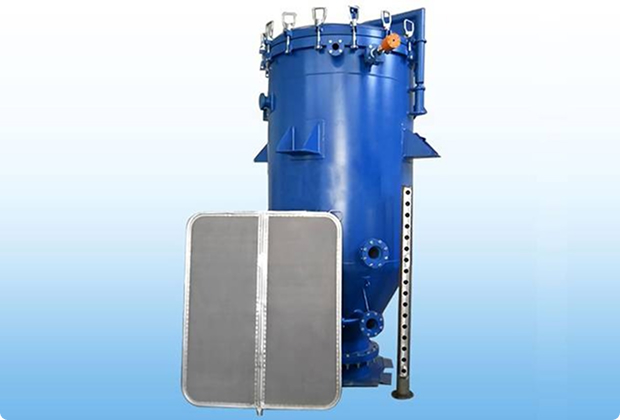
What Customers Need to Control
- Corrosion or pitting from chloride, acid, alkali or incompatible cleaning agents
- Collapse or deformation under pressure reversal and pulsation
- Product loss or contamination through poor edge sealing
- Specification ambiguity between mesh count, opening and retention
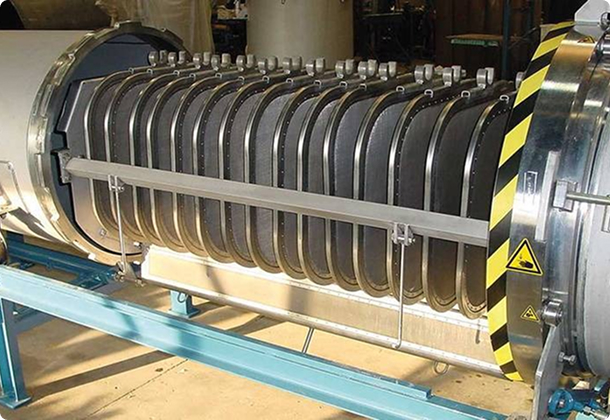
Application-to-Solution Matrix
| Process / Duty | Recommended Mesh Solution | Key Selection Inputs |
|---|---|---|
| Catalyst/resin recovery | Fine woven filter cloth with rigid support | Particle distribution, recovery target, backwash, differential pressure |
| Oil, fuel and hydraulic protection | Dutch-weave cloth; discs, tubes or supported cartridges | Fluid viscosity, cleanliness target, burst/collapse direction |
| Process strainers | Plain/twill mesh baskets with perforated support | Debris size, open area, nozzle load, cleaning access |
| Vents, gas and special safety duties | Engineered mesh assemblies only after hazard review | Gas composition, temperature, standards, certified system boundary |
Verified Data & Public Application Evidence
Public industry case
Public application reference — one medium, several duties. Haver & Boecker publicly lists woven wire cloth for chemical extruder screens, drilling-fluid screens evaluated to API 13C, and flame-arrester discs intended to prevent flame or sparks from escaping pipe systems. These examples show why a general-purpose mesh cannot be promoted as a certified safety device: the complete assembly and applicable standard must be reviewed and validated. This is not a Kangyao project or certification claim.
Engineering interpretation
Material note: 304 stainless steel is widely used for general corrosion resistance, while 316/316L is commonly considered where chloride exposure increases pitting risk. This is only a starting point; concentration, temperature, crevices, stress, cleaning and contaminants can change the result.
Information Required for Selection
- Full chemical composition, concentration and impurities
- Operating, upset and cleaning temperatures
- Normal/maximum differential pressure and pressure direction
- Retention target and required recovery or cleanliness
- Applicable code, hazardous-area and documentation requirements
Contact Us
Request a Custom Quote
To provide a fast and accurate quotation, please provide the following information:
- Direct Factory Pricing
- Custom OEM Solutions
- Expert Technical Guidance
Fill the form
No spam. Your information is 100% safe · Fast response within 24 hours.