

Screen packs for cleaner melt, controlled pressure and reliable changeovers.
Melt filtration removes gels, degraded resin, metal, paper, wood and other contamination before the polymer reaches the die. The correct screen pack must provide the required cleanliness without creating unnecessary pressure or heat history. We supply cut discs, shaped screens and multilayer packs for extruders, screen changers, recycling lines and compounding systems.
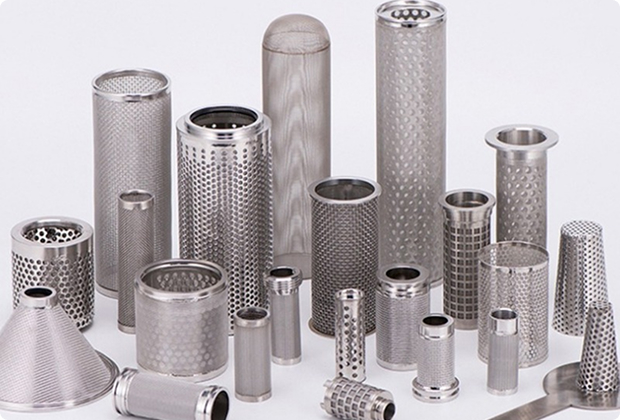
What Customers Need to Control
- Black specks, gels or foreign matter in film, sheet, pipe or profile
- Rapid pressure rise when recycled feedstock contamination changes
- Screen-pack distortion, broken edges or leakage at the breaker plate
- Inconsistent layer sequence between changeovers
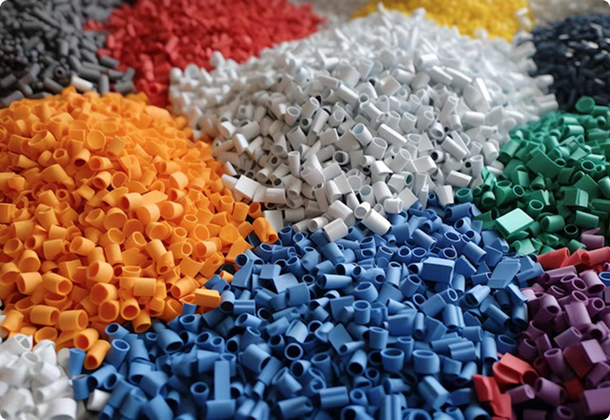
Application-to-Solution Matrix
| Process / Duty | Recommended Mesh Solution | Key Selection Inputs |
|---|---|---|
| Virgin polymer extrusion | Single-layer square mesh or engineered multilayer pack | Product defect limit, melt viscosity, output, change interval |
| Recycled polymer | Graded multilayer screen pack; Dutch weave where finer retention is needed | Feed contamination, acceptable ΔP, screen-changer design |
| Pelletizing/compounding | Round or shaped spot-welded packs, if validated | Breaker-plate pattern, pack orientation, batch traceability |
| Film, fibre, cable, tube | Fine support-and-filter layer combination | Die sensitivity, surface-quality target, conductive contamination risk |
Verified Data & Public Application Evidence
Public industry case
Public application reference — recycled-plastic cable sheathing. Haver & Boecker documents extruder/spinneret filters used to prevent conductive foreign particles in recycled plastic cable sheaths. W.S. Tyler’s public catalogue lists extruder screens for plastic recycling, injection moulding, pelletizing, cable production, hose/tube and medical tubing, with stated retention options of 10–1,000 µm for its own products. Treat that range as an external benchmark, not a Kangyao guarantee.
Engineering interpretation
Process rule: increasing fineness can improve contaminant capture but also increases resistance and may shorten the change interval. Final selection should be validated on the customer’s polymer, temperature, output and screen changer; a nominal mesh count alone does not predict melt-filtration performance.
Information Required for Selection
- Polymer grade and virgin/recycled percentage
- Contaminant type and current defect
- Melt temperature, output and normal/maximum pressure
- Screen changer and breaker-plate drawing
- Current layer sequence, dimensions, edge and pack quantity
Contact Us
Request a Custom Quote
To provide a fast and accurate quotation, please provide the following information:
- Direct Factory Pricing
- Custom OEM Solutions
- Expert Technical Guidance
Fill the form
No spam. Your information is 100% safe · Fast response within 24 hours.