

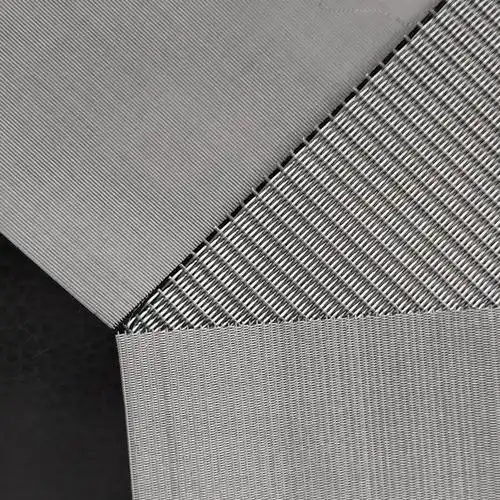
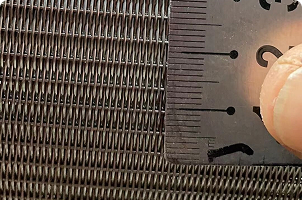
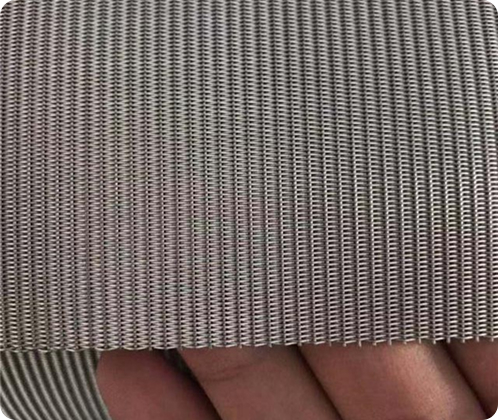
Dutch weave wire mesh
Fine Filtration Wire Cloth for Industrial Applications
Dutch Weave Wire Mesh is a densely woven metal filter cloth used where finer particle retention, mechanical strength, and stable filtration performance are required.
Unlike standard square woven mesh, Dutch weave uses different warp and weft wire counts and wire diameters to create a compact filtration structure. Depending on the weave type, it can provide fine particle retention while maintaining good strength and pressure resistance.
We supply Dutch weave wire mesh for liquid, oil, polymer, chemical, hydraulic, and other industrial filtration applications.
Available in rolls, sheets, strips, discs, and custom-fabricated filter components.
Mainstream Materials
The right material depends on the process fluid, operating temperature, corrosion conditions, and cleaning method.
304 Stainless Steel
304 is a practical choice for general industrial filtration. It offers good corrosion resistance in water, oils, food-processing equipment, and many mild chemical environments.
Common uses:
General liquid filtration · Hydraulic oils · Water treatment · Food-processing equipment
316 / 316L Stainless Steel
316 and 316L contain molybdenum for improved resistance to chlorides and more corrosive process conditions. They are commonly used in chemical processing, marine environments, pharmaceutical equipment, and industrial filtration systems exposed to aggressive fluids.
Common uses:
Chemical filtration · Seawater and chloride environments · Process fluids · Industrial filter elements
Not sure which grade fits your application? Send us the fluid, temperature, and operating conditions for material selection.
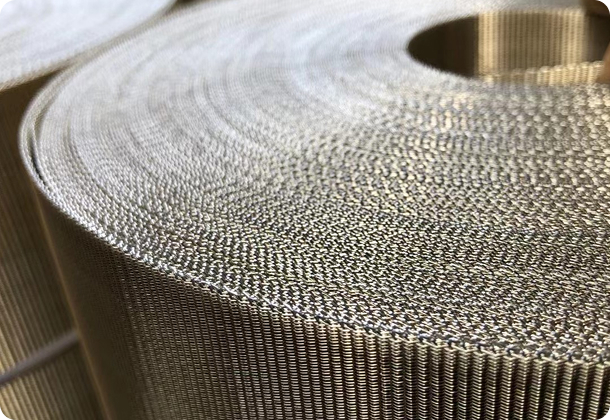
Four Major Weaving Structures
Dutch weave is available in several constructions, each offering a different balance of filtration fineness, flow rate, strength, and pressure resistance.
Plain Dutch Weave
Plain Dutch Weave uses larger warp wires with finer weft wires packed closely together. The dense structure provides reliable particle retention while maintaining good mechanical stability.
Common applications:
Oil filtration · Hydraulic systems · Chemical processing · General industrial filters
Twilled Dutch Weave
Twilled Dutch Weave has a tighter structure than Plain Dutch Weave and is commonly used where finer filtration or higher strength is required.
Common applications:
Fine liquid filtration · Polymer processing · Chemical filtration · Pressure filters
Reverse Plain Dutch Weave
Reverse Plain Dutch Weave uses many fine warp wires combined with larger weft wires. This construction provides a large active filtration area, good flow capacity, and strong resistance to pressure.
Common applications:
Polymer processing · Screen changers · Melt filtration · Continuous filtration systems
Reverse Dutch Twilled Weave
Reverse Dutch Twilled Weave combines a reverse Dutch structure with a twilled pattern. It is used for demanding filtration conditions where strength, flow stability, and controlled particle retention are all important.
Common applications:
Polymer melt filtration · High-pressure filtration · Filter belts · Industrial process filters
Core Specification Parameters
- Dutch weave wire mesh should be specified by more than mesh count alone.
- For an accurate quotation, the following information is recommended:
- Weave type
- Material grade
- Warp × weft mesh count
- Warp wire diameter
- Weft wire diameter
- Required particle retention or micron rating
- Roll width
- Roll length
- Required quantity
- Operating temperature
- Operating pressure
- Process medium
- Required finished form
- Example Specification Format
- Mesh: 12 × 64
- Material: 316L
- Warp Wire Diameter: ___ mm
- Weft Wire Diameter: ___ mm
- Width: ___ mm
- Required Retention: ___ μm
- Actual particle retention depends on the weave structure, wire combination, and test method. Mesh count alone should not be used to determine filtration performance.
Core Product Advantages
Stable filtration accuracy with zero material leakage; Wedge-shaped microporous structure with uniform pore size that prevents expansion and material migration under high pressure, unlike conventional high-mesh plain mesh which deforms and leaks particles; Balanced strength and permeability supported by coarse weft threads, offering superior tensile and impact resistance while being more durable than fine-fiber plain mesh at equivalent precision; High contaminant retention capacity and low clogging risk due to stepped filtration channels that selectively trap impurities layer by layer, extending filter replacement intervals; Compatible with all types of deep processing applications including cutting, edge sealing, multi-layer sintering, rolled-welded filter cartridges, corrugated filter elements, and polishing/cleaning; Clean and easy-to-clean construction using stainless steel without precipitation, achieving complete surface coverage after electrolytic polishing to meet food GMP and pharmaceutical sterility standards.
Complete deep-processing workflow
Leveling and calibration → laser/pressing/cutting → edge sealing → multi-layer composite sintering → argon arc welding of rolled filter cartridges → corrugated forming → ultrasonic degreasing and cleaning → electrolytic polishing → flange/buckle assembly. Final products include: circular edge-sealed filters, multi-layer sintered filter plates, stainless steel filter cartridges, corrugated filter elements, extruder replacement screens, and filter gaskets.
Major Application Industries
New energy lithium batteries
Precision filtration of cathode and anode slurries, impurity removal from electrolytes
Pharmaceutical and food industries
Sterilization of medicinal solutions, filtration of edible oils, purification of beverages, pharmaceutical screening materials
Petrochemical industry
Hydraulic oil, fuel filter elements, replacement screens for plastic extrusion, catalyst recovery
Environmental water treatment
Seawater desalination, precision filtration of acidic and alkaline wastewater
Aviation hydraulics
High-pressure filtration of special fluids, purification of precision oil circuits
Laboratory/electronics
Screening of trace materials, filtration of electronic slurries, electromagnetic shielding
FAQ
Frequently Asked Questions (FAQ)
Conventional plain mesh features uniformly sized warp and weft threads with square pores, making it suitable only for coarse screening. In contrast, sheet-type mesh is woven with differentiated fine warp and coarse weft threads to form wedge-shaped micropores, enabling precise filtration ranging from 1 to several hundred micrometers. Under high pressure, the pore size remains unchanged without allowing leakage of minute impurities, making it a specialized mesh material for fine fluid filtration.
304 is the general-purpose choice for fresh water, weak acids and alkalis, food-grade substances and ambient-temperature fluids, and offers the best cost-performance ratio. 316 and 316L contain molybdenum and resist chloride ions, seawater, acids, alkalis and salt spray, so they are the choice for chemical duty, seawater filtration, lithium battery slurries and pharmaceutical sterile environments. For sustained heat, 321 and 2520 hold up to 800°C. Pure nickel and titanium suit highly corrosive or high-purity media, and phosphor bronze or brass suit electronic shielding and fine lubricant filtration. Select by the working condition first — medium, temperature and pressure — and by cost second.
Not interchangeably. Perforated sheet and welded mesh are structural materials: their openings are large, uniform and made for screening, guarding and support. A saddle net is a filtration material — its wedge-shaped micropores work from 1 μm to a few hundred micrometers, which no perforated or welded product reaches. Where the duty is coarse screening or a load-bearing panel, use perforated or welded mesh; where the duty is precision filtration under pressure, use the saddle net. The two are often combined, the saddle net carried on a welded or perforated support layer.
Contact Us
Request a Custom Quote
Provide your project details below. Our technical team will review your requirements and respond within 24 hours.
- Direct Factory Pricing
- Custom OEM Solutions
- Expert Technical Guidance
Fill the form
No spam. Your information is 100% safe · Fast response within 24 hours.