

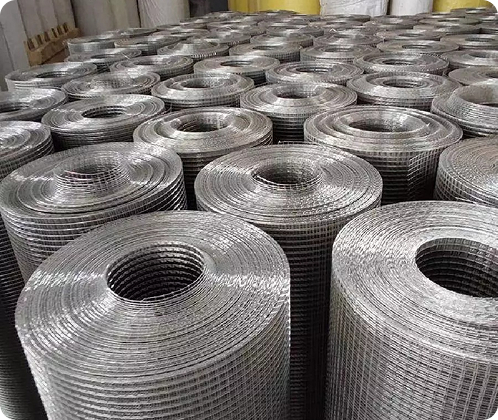
Welded Wire Mesh
Welded wire mesh, also known as welded net or spot-welded mesh, is a mesh material fabricated by vertically arranging metal wires in warp and weft directions and joining the intersections of horizontal and vertical wires through resistance spot welding. As a mass-produced metal mesh, it combines toughness with structural strength and can be directly cut, bent, or welded into various deep-processing products.
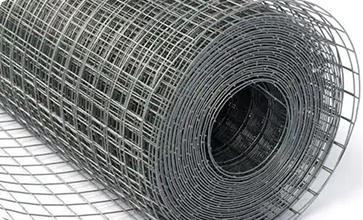
Mainstream material
Stainless steel welded mesh (304/316L), resistant to rust and corrosion, specifically designed for food processing, aquaculture, filtration, and equipment protection; 316L grade exhibits resistance to seawater and chemical chloride ion corrosion.
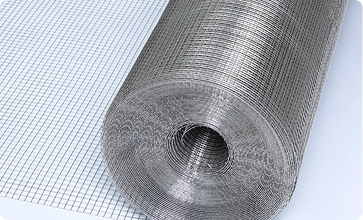
Hot-dip galvanized welded mesh
Fabricated by welding low-carbon steel wires and then undergoing full hot-dip galvanizing, offering excellent rust resistance suitable for exterior wall insulation, aquaculture enclosures, construction site protection, and fencing applications.
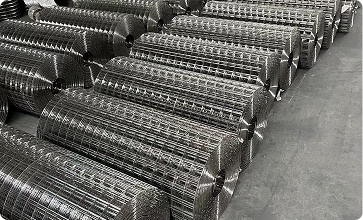
Electro-galvanized and electro-welded mesh with cold galvanizing
low cost, suitable only for short-term use in indoor dry environments; prone to rusting outdoors.
Modified/impregnated welded mesh or galvanized mesh with a plastic coating on the outer surface, featuring a smooth texture, rust resistance, and scratch resistance; commonly used for garden fences and aquaculture cages.
Core specification parameters
| Wire diameter | 0.3 mm – 6 mm; fine wires are used for filtration, while thick wires serve as protective barriers, cages, or shelves. |
| Hole size | Commonly used square holes include 1×1 cm, 2×2 cm, 5×5 cm, and 10×10 cm; rectangular holes can also be customized. |
| Product formats | Rolled mesh (long roll, suitable for large-area installation) and sheet mesh (pre-cut panels, ideal for further processing) |
| Production process | Straightening and cutting of metal wires, ensuring uniform arrangement of warp and weft wires; CNC resistance spot welding with complete fusion at intersection points, eliminating looseness or wire detachment; Post-processing: leveling, cutting into pieces, galvanizing, plastic coating, and polishing; Advanced processing: bending, rounding, edge sealing, welding handles and flanges, assembly of mesh baskets, cages, and protective covers. |
Key Product Advantages
Robust weld points
Integrated horizontal and vertical wire welding prevents force dispersion, offering greater stability than woven mesh structures
Standardized specifications
Uniform mesh openings and excellent flatness facilitate precise cutting and processing
High plasticity
Capable of bending, arc-forming, or welding to create various three-dimensional components
Competitive cost
High mass-production efficiency with superior cost-effectiveness compared to dense-woven mesh and perforated plates
Multiple corrosion protection options
Suitable for indoor and outdoor applications through galvanizing, plastic coating, or stainless steel finishes.
Main application areas
Aquaculture industry
chicken cages, rabbit cages, breeding enclosures, aquatic isolation nets
Construction engineering
exterior wall insulation plastering nets, floor crack prevention nets, temporary construction site protection nets
Filtration and separation
particle screening screens, mechanical filtration support nets, filter element support
Warehousing and supermarkets
storage mesh baskets, shelving racks, shelf isolation nets; equipment protection: fan covers, machine dust-proof nets, mechanical safety isolation nets
Horticulture and municipal applications
garden fences, seedling protection nets, river channel isolation nets.
FAQ
Frequently Asked Questions (FAQ)
Wire diameter ranges from 0.3 mm to 6 mm; fine wires are used for filter screens, while coarse wires are employed for aquaculture cages and protective fences. Standard square mesh sizes include 1×1 cm, 2×2 cm, 5×5 cm, and 10×10 cm, with customizable rectangular irregular mesh patterns available upon request.
Rolled mesh comes as one long roll and is cut to length on site, which suits large continuous areas — fencing, wall insulation, enclosures — and costs less per square metre. Sheet mesh is supplied as pre-cut flat panels, so it stays flat and square, which is what further processing needs: cutting to shape, bending, welding into baskets, cages and covers. Choose roll for area coverage and sheet for fabrication.
Yes, but wire diameter matters more. For a given wire, a smaller opening puts more welded intersections under the same load and spreads it further, so the panel carries more and deflects less. Going to a larger opening without increasing the wire diameter lowers capacity sharply. For shelving, walkways and cages the two are specified together — opening for what must not pass through, wire diameter for the load.
Contact Us
Request a Custom Quote
Provide your project details below. Our technical team will review your requirements and respond within 24 hours.
- Direct Factory Pricing
- Custom OEM Solutions
- Expert Technical Guidance
Fill the form
No spam. Your information is 100% safe · Fast response within 24 hours.