

Basic Definition and Core Features of Stainless Steel Wire Mesh
| Item | Detailed Plain Explanation |
|---|---|
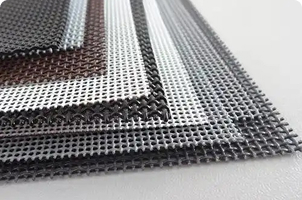
| Basic Definition | Stainless steel wire mesh is a mesh product made from stainless steel wire through weaving, welding, punching, and other processing methods. It provides ventilation, water permeability, filtration, screening, protection, and separation functions. It is a widely used basic hardware material for industrial, civil, and export applications. It has a stable structure, resists deformation, and offers a long service life. |
| Core General Features | 1. Corrosion-resistant and rust-resistant, suitable for dry, wet, acidic, alkaline, and salt-spray environments. 2. High-temperature resistant and not easily oxidized, suitable for high-temperature filtration and screening applications. 3. Uniform mesh openings and stable accuracy, providing controllable filtration and screening performance. 4. Non-toxic, odorless, and easy to clean; some materials can meet food-grade and pharmaceutical-grade requirements. 5. High strength, wear-resistant, durable, and reusable. 6. Available in complete specifications, with custom cutting, edging, forming, and processing options for global export needs. |
| Common International Standards | ISO 9044, ASTM E2016, ASTM E11, EN 10088-3. These are commonly used international acceptance standards in global trade. |
Full-Industry Application Scenarios of Stainless Steel Wire Mesh
| Application Category | Specific Use Scenarios | Core Requirements |
|---|---|---|
| Food and Beverage Industry | Juice, milk, and beverage filtration; grain screening; edible oil purification; food equipment filter mesh; milk tea and soybean milk filtration; fruit and vegetable washing and draining | Non-toxic, safe, easy to clean, rust-resistant, no impurity release, compliant with food-grade safety standards |
| Pharmaceutical and Chemical Industry | Medicinal liquid filtration, chemical liquid purification, reagent screening, reactor protection, acidic and alkaline fluid filtration, waste gas and dust filtration | Acid and alkali resistance, corrosion resistance, high precision, no metal leaching, suitable for corrosive media |
| Water Treatment Industry | Tap water pre-filtration, sewage filtration, seawater desalination, swimming pool water filtration, industrial circulating water purification | Chloride ion resistance, salt-spray resistance, smooth water flow, not easy to clog, long service life |
| Mining and Heavy Industry | Sand and gravel screening, ore classification, coal powder filtration, material impurity removal, heavy equipment protection and separation | High strength, wear resistance, impact resistance, deformation resistance, strong load-bearing capacity |
| High-Temperature Furnace Industry | High-temperature flue gas filtration, furnace material screening, heat treatment equipment protection, incineration equipment filter mesh | High-temperature resistance, high-temperature oxidation resistance, no softening under heat, stable strength |
| Construction and Protection Industry | Door and window protection mesh; balcony anti-theft mesh; construction site isolation mesh; curtain wall ventilation mesh; dust-proof mesh | Good toughness, corrosion resistance, durable appearance, not easy to break |
| Electronics and Precision Industry | Electrolyte filtration, dust protection for precision instruments, ultrafine powder screening, clean filtration in chip production | Extremely high precision, uniform mesh openings, no wire shedding, high material purity |
| Marine and Shipbuilding Industry | Seawater filtration, ship equipment protection, coastal engineering filter mesh, offshore platform filtration equipment | Seawater corrosion resistance, chloride ion resistance, salt-spray resistance, long-term outdoor rust resistance |
Comparison of Main Export Stainless Steel Materials, Performance, Differences, and Applications
| Common Export Material Grade | Core Material Properties | Advantages and Differences | Suitable Export Applications | Unsuitable Applications / Risk Points | Corresponding International Standards |
|---|---|---|---|---|---|
| 304 / SUS304 | A general-purpose stainless steel with standard chromium-nickel composition. It resists corrosion from air, clean water, and weak acids/alkalis at room temperature. It withstands temperatures up to about 800°C. It has good toughness, is not easy to rust, offers the best cost performance, and may be slightly magnetic or non-magnetic. | Affordable price, sufficient supply, strong versatility, and the largest export volume. It has better corrosion resistance than 430 and lower cost than 316. | Ordinary food filtration, clean water treatment, indoor protection, dry screening, general industrial filtration, regular export orders to Southeast Asia and the Middle East | Seawater, high salt-spray environments, strong acids and alkalis, and long-term coastal outdoor use, where rust and corrosion may occur | ASTM A580, ISO 9044, JIS SUS304 |
| 304L / SUS304L | An ultra-low-carbon version of 304. The very low carbon content reduces rust after welding and improves resistance to intergranular corrosion. Mechanical properties are basically similar to 304. | Welding performance is much better than 304. Welds are less likely to corrode or develop rust spots. Suitable for deep processing and forming. Cost is about 10%–15% higher than 304. | Welded filter mesh, food-grade welded components, EU precision filtration orders, deep-processed formed products | Highly corrosive environments, seawater, strong acids and alkalis; corrosion resistance is not significantly improved compared with 304 | ASTM A580, EN 10088-3 |
| 316 / SUS316 | Contains molybdenum, giving better resistance to chloride ions and salt-spray corrosion. Temperature resistance is up to about 850°C. Acid and alkali resistance is better than 304, and the material is more stable. | Solves the weakness of 304 in saltwater and salt-spray environments. Corrosion resistance is about twice as strong. Standard 316 may have slight intergranular corrosion after welding. | General chemical filtration, mild corrosive inland or coastal environments, oil filtration, precision industrial screening | High-intensity seawater, high-concentration acids and alkalis, and long-term welded applications | ASTM A580, JIS SUS316 |
| 316L / SUS316L | An ultra-low-carbon, molybdenum-containing version of 316. It is a high-end general-purpose material with excellent resistance to salt spray, acids, alkalis, and intergranular corrosion. It can withstand seawater environments and temperatures up to about 850°C. Salt-spray testing can reach more than 2,000 hours under suitable conditions. | One of the most popular high-end export materials. Weldable, corrosion-resistant, long-lasting, and suitable for most demanding applications. Cost is about 30%–40% higher than 304. | Pharmaceutical, high-end food processing, seawater desalination, coastal engineering, high-end European and American export orders, acidic and alkaline chemical filtration, precision filter elements | Ultra-high temperatures above 1,000°C and extremely high-concentration corrosive media | ASTM A580, EN 10088-3, ISO 9044 |
| 310S / SUS310S | A high-chromium, high-nickel stainless steel with very strong high-temperature resistance. It can withstand long-term temperatures up to about 1,150°C and resists high-temperature oxidation and sulfidation. Its corrosion resistance at room temperature is average. | Mainly used for high-temperature resistance. Among regular wire mesh materials, it offers the strongest heat resistance. It has high strength and does not soften easily under high temperatures. | High-temperature furnaces, incineration equipment, high-temperature flue gas filtration, high-temperature working conditions in the Middle East, heat treatment screening | Room-temperature corrosion, acids and alkalis, and seawater environments, where cost performance is poor | ASTM A580, JIS SUS310S |
| 430 / SUS430 | An economical ferritic stainless steel, often referred to as stainless iron. It contains no nickel, has very low cost, and is strongly magnetic. It only resists oxidation in dry air and rusts easily in wet or humid environments. | Lowest price, suitable for low-cost orders. Corrosion and water resistance are far weaker than 304 series. | Indoor dry screening, ordinary protection, low-end decoration, dry powder screening, cost-sensitive export orders | Food, chemical, water treatment, humid outdoor environments, and food-grade export orders to Europe and the United States | ASTM A580, EN 10088-3 |
| 2205 Duplex Stainless Steel | A high-strength special stainless steel combining austenitic and ferritic advantages. It resists chloride ions and stress corrosion. Its strength is about 1.5 times that of ordinary 316L. | Resistant to high salt, high chloride, and strong corrosion. Wear-resistant and pressure-resistant, with performance far beyond 316L. Processing is more difficult and cost is higher. | Deep-sea engineering, high-concentration chemical chloride environments, high-end anti-corrosion heavy-duty filter mesh | Ordinary room-temperature filtration, where cost performance is extremely low | ASTM A240, ISO 9044 |
Core Basic Parameters of Stainless Steel Wire Mesh
| Parameter | Plain Explanation | Function in Selection | Common International Tolerance |
|---|---|---|---|
| Mesh Count | The number of openings within one inch, or 25.4 mm. The higher the mesh number, the denser the mesh and the finer the filtration. | Determines filtration or screening precision. Low mesh counts are used for coarse screening; high mesh counts are used for fine filtration. This is one of the most common parameters customers ask about. | ±2% to ±5% |
| Wire Diameter | The thickness of the stainless steel wire used in the mesh, measured in mm. The thicker the wire, the stronger the mesh. | Under the same mesh count, a thicker wire improves durability, pressure resistance, and wear resistance, but reduces aperture size and lowers water or air flow. | ±0.01 mm to ±0.03 mm |
| Aperture | The actual open size of the mesh opening, measured in mm or µm. It directly determines the particle size that can be blocked. | The core filtration indicator. The aperture should match the particle size that needs to be retained. | ±2%; high precision ≤ ±0.002 mm |
| Open Area | The percentage of total mesh opening area compared with the whole mesh area. | A higher open area means faster flow, lower resistance, and less clogging. | Not less than 90% of theoretical value |
| Width | The width of the whole roll. Common widths include 1 m, 1.2 m, 1.5 m, and 2 m. | Determines cutting utilization. For export roll shipments, standard widths are preferred to reduce waste. | ±5 mm |
| Weaving Method | The structure formed by the crossing of stainless steel wires, including plain weave, twill weave, dense Dutch weave, and Dutch weave. | Determines surface flatness, accuracy, strength, flow rate, and application suitability. Different processes suit different working conditions. | Unified process standard under ISO 9044 |
Industry Specification Matching Table for Filter Mesh and Screen Mesh
| Product Category | Application Industry / Scenario | Recommended Mesh Range | Suitable Wire Diameter / Aperture | Recommended Material | Suitable Process |
|---|---|---|---|---|---|
| Filter Mesh — Fluid Filtration: Liquid / Gas Filtration | Food and beverage filtration, including juice, edible oil, and alcoholic beverages | 40–120 mesh | Wire diameter 0.09–0.22 mm; aperture 0.12–0.42 mm | 304, 304L | Plain weave |
| Filter Mesh — Fluid Filtration: Liquid / Gas Filtration | Pharmaceutical liquid and fine chemical filtration | 150–300 mesh | Wire diameter 0.04–0.075 mm; aperture 0.04–0.09 mm | 316L | Dense Dutch weave |
| Filter Mesh — Fluid Filtration: Liquid / Gas Filtration | Ordinary tap water and industrial circulating water filtration | 20–60 mesh | Wire diameter 0.16–0.35 mm; aperture 0.26–0.92 mm | 304 | Plain weave |
| Filter Mesh — Fluid Filtration: Liquid / Gas Filtration | Seawater desalination and coastal water treatment | 80–200 mesh | Wire diameter 0.055–0.14 mm; aperture 0.07–0.18 mm | 316L, 2205 | Dutch weave |
| Filter Mesh — Fluid Filtration: Liquid / Gas Filtration | High-temperature flue gas and exhaust gas filtration | 10–80 mesh | Wire diameter 0.14–0.55 mm; aperture 0.18–2.0 mm | 310S | Twill weave |
| Filter Mesh — Fluid Filtration: Liquid / Gas Filtration | Electronic electrolyte and ultra-precision filtration | 300–635 mesh | Wire diameter 0.02–0.04 mm; aperture 0.02–0.045 mm | 316L | Ultra-high-precision dense Dutch weave |
| Screen Mesh — Solid Screening: Particle Classification / Impurity Removal | Heavy-duty screening for sand, gravel, ore, and coal powder | 1–40 mesh | Wire diameter 0.22–6.0 mm; aperture above 0.4 mm | 304, 430 | Heavy-duty plain weave / welded |
| Screen Mesh — Solid Screening: Particle Classification / Impurity Removal | Ordinary screening for grain and powder | 40–100 mesh | Wire diameter 0.11–0.22 mm; aperture 0.14–0.42 mm | 304 | Plain weave |
| Screen Mesh — Solid Screening: Particle Classification / Impurity Removal | Fine powder and chemical particle classification | 100–200 mesh | Wire diameter 0.055–0.11 mm; aperture 0.07–0.14 mm | 304, 316L | Twill weave |
| Screen Mesh — Solid Screening: Particle Classification / Impurity Removal | Low-cost screening of dry materials | 20–80 mesh | Wire diameter 0.14–0.35 mm; aperture 0.18–0.92 mm | 430 | Plain weave |
Stainless Steel Wire Mesh Material Selection Table
| Working Condition / Export Market | Core Selection Requirements | First Choice Material | Alternative Material | Materials Strictly Prohibited |
|---|---|---|---|---|
| Food-grade and pharmaceutical export orders for Europe and the United States | Non-toxic, no harmful leaching, weldable, corrosion-resistant, capable of meeting FDA / REACH requirements | 316L | 304L | 430, 201 |
| Ordinary industrial use, clean water, dry environments, Southeast Asian orders | Cost-effective, rust-resistant, generally durable | 304 | 304L | 430 is prohibited in humid environments |
| Chemical acids and alkalis, salt-containing wastewater, coastal engineering | Acid and alkali resistance, chloride ion resistance, salt-spray resistance | 316L | 2205 | 304, 430 |
| High-temperature furnaces, incineration, high-temperature flue gas | High-temperature resistance and high-temperature oxidation resistance | 310S | 316L within 850°C | 304, 430 |
| Deep sea, seawater desalination, highly corrosive marine environments | Extremely strong chloride ion resistance, corrosion resistance, and long service life | 2205 | 316L | 304, 316, 430 |
| Low-cost dry screening, indoor protection, low-end export orders | Low cost and basic functional performance | 430 | None | Prohibited in humid, corrosive, and food-related environments |
Main Production Processes of Stainless Steel Wire Mesh
| Process Type | Plain Process Explanation | Core Product Features | Suitable Export Products | International Standards |
|---|---|---|---|---|
| Plain Weave | The most basic weaving process. Warp and weft wires cross over and under each other alternately. The openings are square and uniform. Production is simple and efficient. | Flat surface, standard opening shape, high cost performance, strongest general usability | General filter mesh, grain screen mesh, protection mesh, most regular export orders | ISO 9044, ASTM E2016 |
| Twill Weave | Warp and weft wires cross in a 2:2 pattern, forming a diagonal texture. It can be woven with thicker wire diameters. | Higher strength, better wear and impact resistance, not easy to deform, suitable for high-pressure working conditions | Heavy-duty screening mesh, high-pressure fluid filter mesh, industrial wear-resistant mesh | ISO 9044, ASTM E2016 |
| Dense Dutch Weave | A high-precision weaving process using thicker warp wires and finer weft wires in a dense structure. | Extremely high filtration precision, strong dirt-holding capacity, good pressure resistance, no leakage filtration | High-precision filter mesh and filter elements for pharmaceutical, electronic, and chemical industries | ISO 9044, ASTM E2016 |
| Dutch Weave | Fine weft wires are closely arranged to form a dense filtration layer with good permeability. | Fast flow rate, low resistance, not easy to clog, suitable for high-flow filtration | Seawater desalination, high-flow water treatment, chemical fluid filtration | ISO 9044, ASTM E2016 |
| Welding Process | Warp and weft wire intersections are fixed by resistance welding, forming integrated joints without loosening. | Extremely stable structure, impact-resistant, deformation-resistant, strong load-bearing capacity | Protection mesh, isolation mesh, heavy-duty screening mesh, construction mesh | ASTM F1264, EN 10223-3 |
| Punching Process | Stainless steel sheet is punched by CNC equipment into uniform holes without woven gaps. | Flat sheet surface, accurate hole size, no wire shedding, solid structure | Sound-absorbing mesh, ventilation protection covers, precision equipment guard mesh | ISO 14315, ASTM F1264 |
Essential International Certifications and Compliance Standards for Export
| Certification / Standard | Applicable Market | Applicable Products | Core Compliance Requirements |
|---|---|---|---|
| FDA Food-Grade Certification | United States and North American markets | Filter mesh for food and pharmaceutical contact applications | No heavy metal leaching, non-toxic and harmless, compliant with food-contact safety requirements |
| CE + CPR Certification | Entire EU market | All industrial and construction wire mesh products | Mechanical properties and corrosion resistance must meet requirements; manufacturer’s DoC self-declaration document should be provided |
| RoHS + REACH | EU and global high-end markets | Filter mesh for electronics and chemical applications | Restricted lead, mercury, cadmium, and other hazardous heavy metals; no excessive harmful substances |
| ISO 9001 Quality Management System | Global market | All export products | Standardized production process, product traceability, and controllable quality |
| SGS Third-Party Testing | Commonly used in global export orders | Customer-specific inspection batches | Material composition, salt-spray resistance, accuracy, and mechanical properties must pass testing |
Specification Selection Notes for Filter Mesh and Screen Mesh
Mesh count, wire diameter, and aperture are interdependent. Orders must never be placed based on only one parameter.
Under the same mesh count, a thicker wire improves structural strength, pressure resistance, and wear resistance, but the actual aperture becomes smaller, water and air flow are reduced, and the risk of clogging increases. A thinner wire provides higher flow rate and lower resistance, but the mesh body has weaker strength and may deform or break under high-pressure or screening conditions. For fluid filtration, flow rate and anti-clogging performance should be prioritized, with a suitable fine wire diameter and standard aperture. For solid screening and heavy-duty working conditions, strength should be prioritized. A thicker wire diameter should be selected, accepting part of the flow reduction in exchange for longer service life.
Material Matching Risk-Avoidance Notes
- Material selection must strictly follow the working condition classification. Material mixing and low-grade substitution must be avoided.
- For food, pharmaceutical, and high-end orders, 430 and 201 materials must not be used. 316L should be the first choice, and 304L can be used as an alternative.
- These materials can better meet the requirements of no harmful leaching, weldability, and food-grade compliance.
- For humid, outdoor, coastal, seawater, acidic, alkaline, and corrosive environments, ordinary 304 should not be used. Long-term use may cause pitting corrosion, rust, and cracking. 316L should be selected instead.
- For high-temperature working conditions, 310S is the dedicated material. Long-term use of 304 or 316L above 800°C may lead to oxidation failure, deformation, and breakage.
- 430 is only suitable for indoor, dry, low-cost screening applications. It must not be used in humid environments. Before shipment, material spectrometer inspection records should be kept for all materials to meet export inspection requirements.
Weaving Process Matching Notes
- Different processes cannot be replaced casually. The process must match the actual application and customer requirements.
- Plain weave has the strongest general usability. It is suitable for regular filtration, screening, and protection applications, with the best cost performance.
- Twill weave and heavy-duty weaving should only be used for high-pressure, wear-resistant, and heavy-duty screening conditions. If used for ordinary fluid filtration, they may increase filtration resistance and reduce flow rate.
- Dense Dutch weave focuses on high-precision ultra-fine filtration. It should not be used in rough working conditions, otherwise the cost will be wasted.
- Dutch weave is designed for high flow and reduced clogging. It is especially suitable for water treatment and seawater desalination.
- Welded mesh and perforated mesh focus on structural protection and heavy-duty separation. They should not be used for precision filtration, as leakage filtration and insufficient accuracy may occur.
- All processes should comply with ISO and ASTM international standards. The mesh openings should be uniform, with no skipped wires, broken wires, loose wires, or burrs.
Production Processing and Finished Product Quality Notes
- Export orders require strict control of finished product details. Defective products must not be shipped.
- The mesh surface must be flat and regular. Warp and weft wires should be neatly arranged. There should be no skipped wires, loose wires, distorted openings, or broken wires. Edges should be smoothly cut without burrs.
- For deep-processed products with edging or welding, the welds must be smooth, with no false welding, no de-welding, and no rust spots.
- High-precision filter mesh of 300 mesh and above should be packaged separately with dust-proof and moisture-proof protection to prevent compression deformation and mesh clogging during transportation.
- All dimensions, widths, and parameter tolerances must strictly follow international standards. Mesh count, wire diameter, and aperture deviations should be controlled within the standard range. For high-end orders, third-party SGS testing reports can be provided.
- Different packaging standards should be applied for roll shipments, cut-piece shipments, and formed filter mesh shipments to prevent transportation damage.
Industry-Specific Application Notes
- For the food and pharmaceutical industries, finished products must be clean, free from oil stains, and free from impurities. Cleaning treatment can be carried out before shipment. Products should meet FDA and REACH food-grade compliance requirements. For welded products, 304L and 316L should be prioritized to avoid weld rust and metal leaching problems.
- For water treatment and seawater industries, chloride-ion-resistant materials must be used in coastal and high-salt environments. Ordinary clean water pre-filtration can use 304. Fine filtration and seawater applications should be upgraded to 316L or 2205. Dutch weave should be prioritized to improve flow rate and reduce clogging.
- For high-temperature furnace applications, only 310S is suitable for ultra-high-temperature conditions. During installation and use, sudden cooling and heating should be avoided to prevent cracking, oxidation, and shedding.
- For mining and heavy-duty screening, thick-wire heavy-duty mesh should be selected. During production, structural stability should be strengthened to withstand high-frequency vibration, impact, and wear, reducing the breakage rate.
- For the electronics and precision industry, ultra-high-mesh filter mesh should be produced in a clean environment and packed in independent sealed packaging. This helps ensure material purity, no dust residue, and compliance with environmental requirements in the electronics industry.
After-Sales Notes
Compliance documents should be prepared according to different export markets. All documents should be available in both Chinese and English and meet local customs clearance requirements.
Quotation, contract, and proforma invoice parameters must be consistent. Mesh count, wire diameter, aperture, material, process, width, and execution standards should be clearly marked. Vague parameter descriptions must be avoided to reduce disputes.
For after-sales service, the applicable working conditions and material warranty scope should be confirmed with the customer in advance. Human-caused installation damage, incorrect working-condition selection, and product quality problems should be clearly distinguished to reduce the risk of cross-border disputes.