

Custom Wire Mesh Fabrication
Custom Wire Mesh Fabrication of stainless steel wire mesh involves using base materials such as woven nets, rolled nets, mat-type nets, and perforated nets made from 304, 316L, 321, 904L, and Hastelloy stainless steels. Through secondary and tertiary precision machining processes — including cutting, stamping, edging, bending, welding, multi-layer sintering, polishing, cleaning, and forming assembly — the flat coil or plate semi-finished wire mesh is transformed into standardized metal products with specific shapes, structures, filtration capabilities, load-bearing capacity, and protective functions, forming a comprehensive processing system.
Key Properties of Mainstream Basic Raw Materials
304 Stainless Steel Mesh
Universal type, resistant to fresh water, weak acids and alkalis; commonly used in food processing, water treatment, and general mechanical filtration
316/316L Stainless Steel Mesh
Contains molybdenum, resistant to chloride ions, seawater, and chemical corrosion; preferred for pharmaceutical, petroleum, and seawater treatment applications
Special Alloy Meshes
Resistant to severe corrosion, high temperatures, and biocompatibility; suitable for fine chemical, aerospace, and medical applications
Weaving Types
Plain weave (for uniform filtration), twill (for high strength), mat-type dense weave (for micron-level filtration), and braided mesh (for high-pressure support)
Core Deep Processing Technology Classification/Manufacturing Processes
Planar Forming Processing (Basic Process)
Leveling and Net Drawing: Correct warping and sagging of the woven net surface to ensure flatness; Laser, Pressing, or Plasma Cutting: Cut circular, square, or custom-shaped net sheets with laser precision reaching ±0.2 mm; pressing is suitable for mass-produced standard filters; Edging and Overlapping: Encase net edges with stainless steel or aluminum plates to prevent thread detachment and facilitate sealing installation; Surface Treatment: Electrolytic polishing, wire drawing, and ultrasonic degreasing cleaning, meeting food and pharmaceutical cleanroom standards.
Three-dimensional bending and welding processing (structural forming)
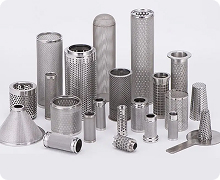
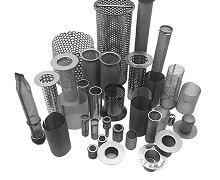
Fabricate three-dimensional components through bending, spot welding, full welding, and rounding; Rounding welding: filter tubes, filter columns, filter screen caps; Bending and welding assembly: disinfection mesh baskets, turnover baskets, barbecue grilles, fan protective nets, sample separation sieve frames; Wave-bending process: corrugated filter elements and screens to increase filtration area and reduce fluid resistance.
Advanced composite sintering deep-processing (precision filtration core)
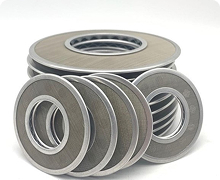
Multiple layers of sieves with varying mesh sizes are stacked and subjected to high-temperature vacuum sintering to form a monolithic rigid plate, featuring a structure composed of a single protective layer, multiple gradient filtration layers, and a support layer. Advantages include permanent fixed pore size, high pressure resistance, ease of repeated cleaning, and precision ranging from 1 to 100 μm, making it widely used in petrochemical, hydraulic, and new energy slurry filtration applications.
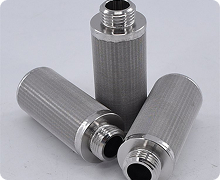
Integrated assembly
The main categories and application scenarios of these mainstream deep-processing finished products include petrochemicals, water treatment and environmental protection, food and beverage processing, pharmaceuticals and medical devices, hydraulic machinery, plastic extrusion and granulation, lithium battery slurry filtration for new energy applications, aerospace, architectural decoration, aquaculture, laboratory screening, and electronic electromagnetic shielding.
Filter classification (dominant in the market)
Circular filters, edged filter screens, multi-layer sintered filters, welded filter cartridges, corrugated filter elements, oil-gas separation and foam removal nets, filter screen gaskets, hydraulic filter caps
Support basket categories
medical sterilization baskets, food cleaning baskets, storage and handling mesh baskets, laboratory sampling sieves, barbecue grilles, material drying nets
Protective shielding categories
fan covers, equipment dust-proof nets, electromagnetic shielding nets, door/window insect-proof nets, mechanical safety isolation nets
Decorative and chemical filling materials
architectural metal decorative nets, chemical wire mesh fillers, distillation column corrugated nets, curtain wall metal woven components
Core Advantages
Durability under harsh conditions
The stainless steel substrate is resistant to acids and alkalis, withstands high temperatures (−200°C to 800°C), and exhibits rust resistance, making it suitable for corrosive, high-temperature, and high-pressure environments
Stable performance
After sintering, edge sealing, or welding, the pore structure remains stable with consistent filtration accuracy
Reusability
The metal material can be disassembled, cleaned, and reused repeatedly, offering a service life several times longer than that of filter paper or plastic filters
Customization flexibility
Dimensions, mesh size, shape, material, and mounting interfaces can be customized through mold manufacturing for non-standard equipment
Hygiene and safety
After polishing and cleaning, the product is free from burrs and precipitates, meeting food GMP and pharmaceutical sterile production requirements.
The industry is characterized by a high degree of customization, with over 80% of orders involving non-standard or specialized components. The manufacturing scope is extensive, covering everything from small-scale micro-filters to large-scale complete filtration systems. Downstream sectors such as environmental protection, pharmaceuticals, and new energy continuously drive demand for advanced processing of high-precision wire mesh products, leading to annual expansion of the market.
FAQ
Frequently Asked Questions (FAQ)
Basic processes: leveling, cutting, edging, bending, spot welding/melt welding, rounding, ultrasonic cleaning, and electrolytic polishing; Advanced processes: multi-layer mesh vacuum sintering, wave folding, flange welding, and assembly into integrated finished products.
Laser cutting reaches ±0.2 mm and takes any outline, so it suits custom shapes, small runs and prototypes, and leaves a sealed edge that will not fray. Stamping is faster and cheaper per piece once the die exists, so it suits mass-produced standard filters in fixed sizes. In short: laser for non-standard and low volume, stamping for standard and high volume.
Edging encases the cut edge in a stainless steel or aluminium frame. It stops the warp and weft threads detaching at the cut, holds the mesh flat under pressure, and gives the element a sealing face to seat against in its housing. It can be omitted only where the edge is already captured — for example a sintered plate, or a disc clamped on all sides — otherwise the edge frays and the seal leaks.
Not when it is done correctly. Argon arc and spot welding are used with parameters matched to the wire diameter, and the heat-affected zone is cleaned ultrasonically and electrolytically polished afterwards so no oxide or weld spatter is left to start corrosion. Breakage comes from overheating a fine wire or welding a mismatched filler, which is why the process is set by wire diameter and material rather than applied uniformly.
Contact Us
Request a Custom Quote
Provide your project details below. Our technical team will review your requirements and respond within 24 hours.
- Direct Factory Pricing
- Custom OEM Solutions
- Expert Technical Guidance
Fill the form
No spam. Your information is 100% safe · Fast response within 24 hours.