

Stainless Steel Crimped Wire Mesh
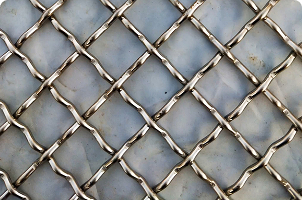
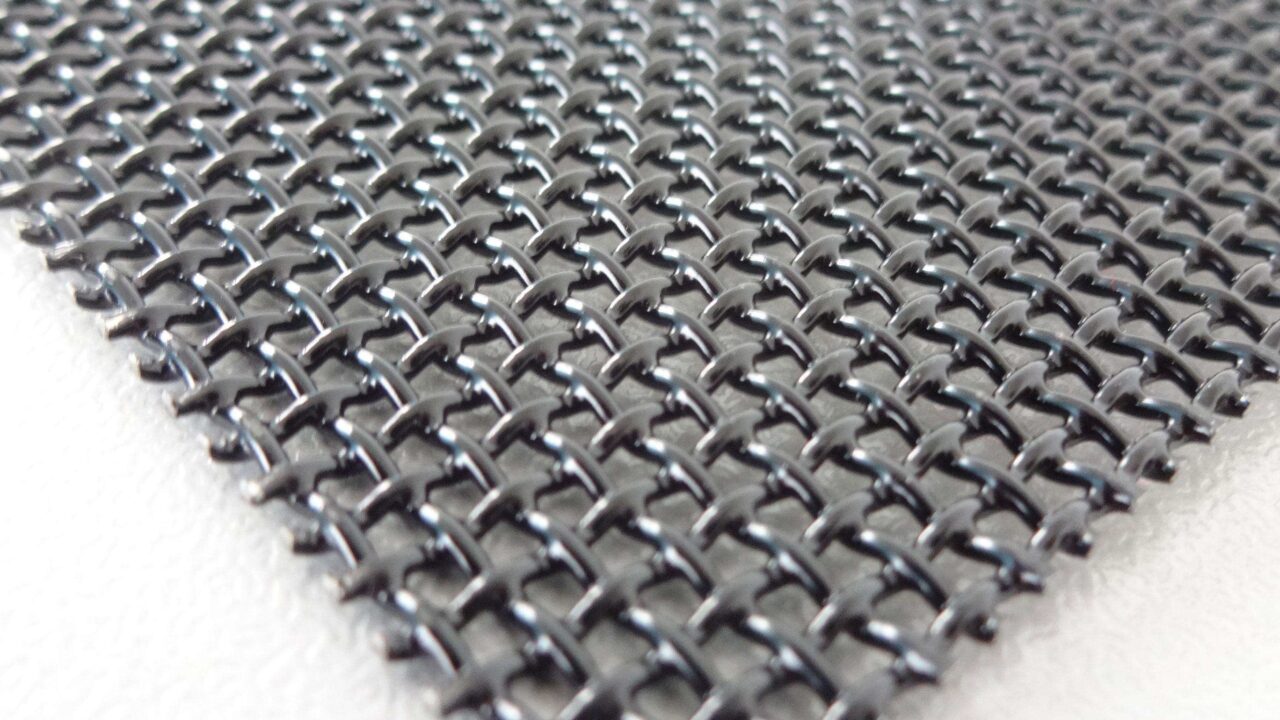
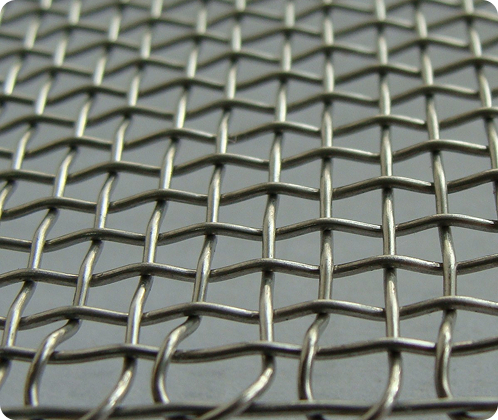
Stainless Steel Crimped Wire Mesh, also known as embossed mesh or mineral screening mesh, is manufactured using a process that combines wave rolling and weaving: metal wires are first rolled to create continuous corrugated patterns, which are then interlocked through the interweaving of warp and weft strands without welds, with mesh openings secured by mutual interlocking of the corrugations. It is a high-strength, wear-resistant metal woven mesh designed primarily for heavy-duty screening and load-bearing protection, distinguishing it from welded mesh and conventional plain-woven mesh.
Main Materials and Applications
Manganese steel/black steel wire rippled mesh
fabricated from 65Mn high-manganese steel wire, featuring high hardness and exceptional wear resistance. Specifically designed for use in mine vibrating screens, sand and gravel grading systems, and coal screening applications; it exhibits excellent resistance to high-frequency vibrations and does not easily break.
304 stainless steel wire mesh
a universal anti-corrosion solution resistant to fresh water and weak acids, suitable for food screening, grain storage ventilation, indoor equipment protection, and standard outdoor fencing, offering the best cost-performance ratio.
316L stainless steel woven mesh
containing molybdenum, resistant to chloride ions, seawater, chemical acids and alkalis, suitable for marine aquaculture, chemical particle filtration, and coastal equipment applications.
Hot-dip galvanized low-carbon steel wire mesh
with thick zinc coating for rust resistance, suitable for pig manure drainage nets, livestock cages, grain storage facilities, construction site protection, and outdoor isolation applications at a moderate cost.
201 Stainless steel wire mesh
low-cost and low-nickel; suitable only for temporary isolation or decorative use in dry indoor environments, as it tends to rust in humid conditions.
Weaving Classification (Four Main Techniques)
Bidirectional Wave-Rolled Weaving (Standard Type)
Both warp and weft threads are rolled into waves, interlocking crosswise to create a stable mesh structure suitable for screening and protection applications.
Tight-lock carding (heavy-duty mineral screening)
Features deeper corrugated interlocking and the highest tensile strength, making it the preferred choice for high-frequency vibration screening in mining applications.
Flat-top weaving mesh (for decoration/food applications)
Features a smooth surface without protrusions, resists material adhesion, suitable for food cooling and architectural decorative applications.
Unidirectional wave separation carding (light filtration
Only unidirectional creasing, resulting in a lightweight and thin texture with small particle grading and a supporting mesh layer.
Core Specifications
| Wire diameter range | 0.3 mm – 12 mm; fine wires for lightweight filtration, coarse manganese steel wires for heavy-duty mineral screening |
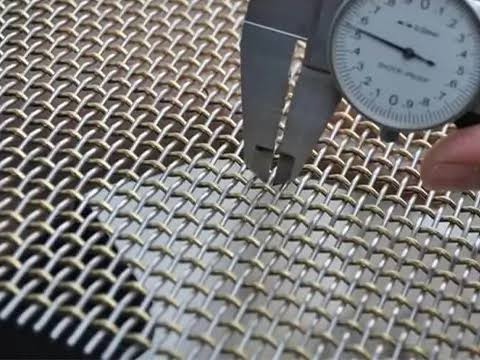
| Mesh size | 1 mm – 100 mm (square/rectangular holes, customizable) |
| Product forms | complete rolls (10–30 m) or fixed-length sheet screens for easy cutting and further processing; standard widths: 1 m, 1.2 m, 1.5 m, 2 m |
Complete Production Process
Wire straightening → Wave pattern rolling on rolling machine → Weaving with warp and weft interlocking on CNC loom → Leveling and calibration → Cutting/rolling into coils → Surface treatment (galvanizing, spray coating, polishing) → Deep processing (edge binding, bending, welding, assembly)
Core Product Advantages
Stable structure with no deformation; wave wires interlock securely without weld points, preventing hole displacement or wire dispersion under tension or vibration; strength per unit wire diameter is 30%–50% higher than that of welded wire mesh or conventional plain wire mesh
Wear-resistant and impact-resistant due to molybdenum steel material suitable for high-frequency vibration conditions in mining environments, offering long service life with minimal wear or perforation
Excellent load-bearing performance; heavy-duty wire mesh can be used as stepping plates or load-bearing screens, balancing ventilation and load capacity
Compatible with various deep-processing applications including cutting, edge binding, bending, rolling, welding into screen baskets, protective covers, or manure discharge plates
Comprehensive corrosion protection options including zinc plating, stainless steel, and spray coating, covering all indoor/outdoor, dry/wet, and corrosive environments
Main Application Industries
Mining Sand and Gravel Industry (Core)
Ore, coal, sand and gravel vibration classification and screening
Aquaculture and Agriculture
Pig manure drainage nets, chicken and rabbit cages, grain warehouse ventilation screens
Food Processing
Grain screening, fruit and vegetable cooling, granular material grading; Industrial Machinery: Machine tool protective covers, fan isolation nets, equipment support mesh
Construction and Municipal Engineering
Anti-slip walkways on construction sites, wall protection structures, interior decorative partitions; Chemical and Seawater Applications: 316L material used for chemical granular filtration and seawater aquaculture isolation systems.
FAQ
Frequently Asked Questions (FAQ)
Double-direction wave-separating meshing: Standard model suitable for both screening and protection applications; tightly locked meshing: features deeper wave interlocking for superior tensile strength, ideal for high-frequency vibration conditions in heavy-duty mineral screens; flat-top meshing: provides a smooth and even mesh surface that prevents material adhesion, suitable for food cooling and decorative purposes; unidirectional wave-separating meshing: lightweight design with small particle filtration capability and support lining mesh.
Wire diameter runs from 0.3 mm to 12 mm and mesh size from 1 mm to 100 mm, in square or rectangular openings. Fine wires suit lightweight filtration and decorative work; coarse manganese steel wires suit heavy-duty mineral screening. Rolls come in 10–30 m lengths at standard widths of 1 m, 1.2 m, 1.5 m and 2 m, or as fixed-length sheet screens for cutting and further processing.
Coil (roll) mesh comes as a continuous length and is cut on site, which suits large runs of fencing, ventilation screens and enclosure work at the lowest cost per square metre. Tape (sheet) mesh is supplied pre-cut and flat, which is what a vibrating screen deck, a stepping plate or any part that will be framed, bent or welded needs — it stays square and takes edge binding cleanly.
No. The openings are held by the corrugations locking into one another rather than by weld points, so there is nothing to shear under tension or vibration. That is the reason strength per unit wire diameter runs 30%–50% above welded or plain woven mesh, and why the pattern stays true under high-frequency vibration in mineral screening.
Contact Us
Request a Custom Quote
Provide your project details below. Our technical team will review your requirements and respond within 24 hours.
- Direct Factory Pricing
- Custom OEM Solutions
- Expert Technical Guidance
Fill the form
No spam. Your information is 100% safe · Fast response within 24 hours.